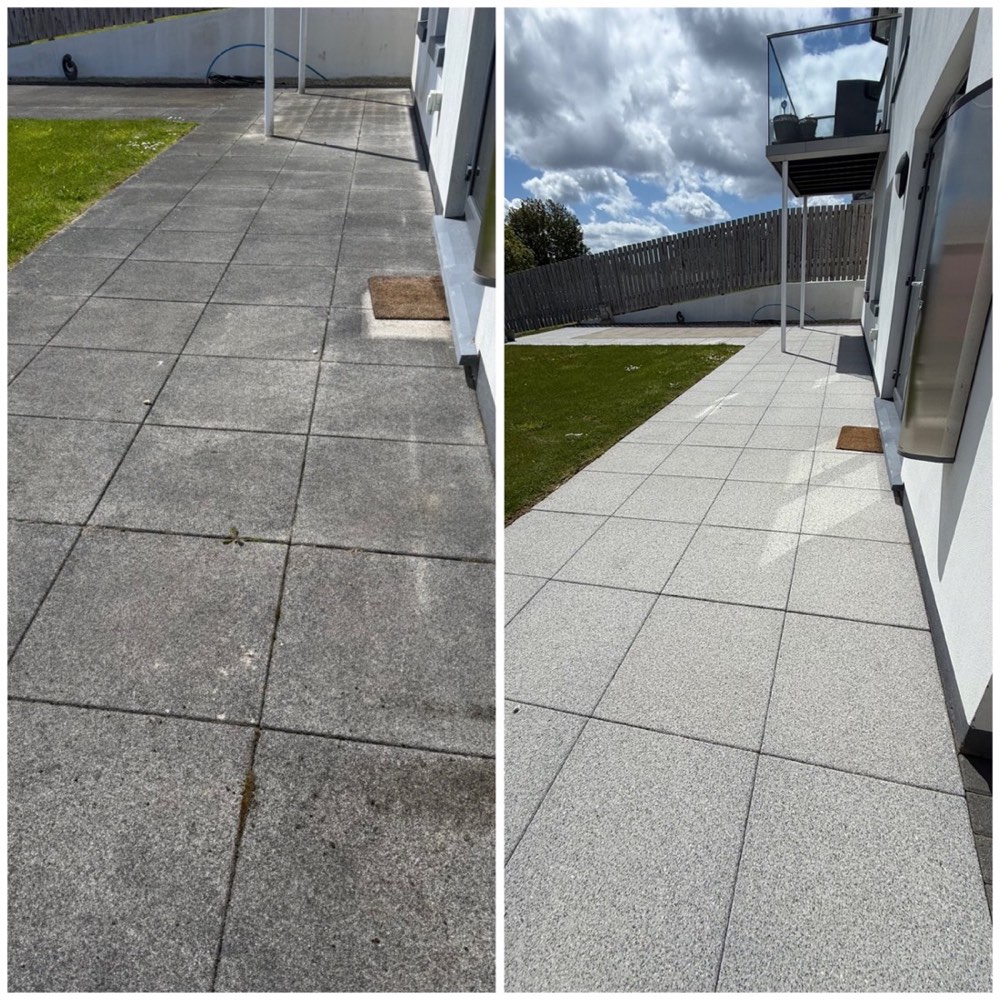
Patio cleaning on the Isle of Man is often a summer job, but the useful question is not just whether the slabs look brighter. Patios, paths and steps collect algae, moss, soil, leaf tannins, bird mess, barbecue grease, pollen and coastal grime. That can affect kerb appeal, guest readiness and everyday footing around entrances and gardens.
This guide is a practical scoping checklist. It is not a promise that every stain, loose joint, old sealant mark, lichen patch, drainage issue or damaged slab can be restored by cleaning alone. Some surfaces need repair, re-pointing, re-sanding, sealing advice or specialist assessment before aggressive cleaning would be sensible.
Quick answer
Book patio or pathway cleaning when algae, moss, mud, food spills, traffic marks or shaded damp areas make normal sweeping insufficient. Before work starts, confirm the surface, drainage, water access, furniture moves, fragile edges, loose joints, nearby planting and whether steps, paths, bin stores or entrance areas should be included with the patio.
Why Isle of Man patios become slippery and tired
Manx weather gives exterior surfaces a lot to deal with. Damp spells, sea air, shaded walls, overhanging trees, soil from lawns, parking-area grit and summer garden use can all feed organic growth or dull the surface. A patio that looks acceptable when dry can feel very different after rain or evening condensation.
- North-facing or shaded slabs where algae and moss stay damp for longer
- Steps and thresholds where people enter with wet shoes
- Paths between parking, bins, washing lines, sheds and garden seating
- Holiday-let and guest areas that need to look ready between bookings
- Outdoor dining areas where grease, drinks and food residue collect
- Block paving or jointed slabs where weeds and loose sand need separate attention
A practical patio-cleaning scope
1. Identify the surface before choosing a method
Concrete flags, natural stone, porcelain tiles, block paving, tarmac edges and older patched areas do not all respond the same way. Controlled pressure may suit some hard surfaces, while softer stone, failed pointing, flaking sealant or unstable edges may need a gentler approach or exclusion.
- Tell CleanCo if the patio is natural stone, concrete, block paving, porcelain or unknown
- Flag cracked slabs, loose edging, lifted blocks, failed pointing and hollow-sounding areas
- Point out old paint, sealant, resin, oil or rust marks before quoting
- Agree whether re-sanding, re-pointing, sealing or repairs are excluded or separately arranged
2. Plan water, runoff and drying time
A good clean should not push dirty water into door thresholds, air bricks, neighbouring land or planted beds without thought. Runoff, drainage and drying time matter, especially where people need to use steps or smooth paths soon after the job.
- Confirm where water can drain and whether drains are clear
- Keep doors, vents, low sockets and fragile garden features protected where practical
- Move planters, furniture and loose items before the clean where agreed
- Leave enough drying time before guests, viewings, deliveries or furniture replacement
- Treat signs and cones as warnings, not as a substitute for keeping people off wet smooth surfaces
3. Include the routes people actually use
The main patio may be the visible job, but the route to it often shapes the first impression. A clean seating area beside a dark green path, dirty step or stained threshold can still feel unfinished.
- Front paths, side paths and steps from parking areas
- Back-door thresholds, patio doors and outdoor dining routes
- Bin-store paths, shed access and washing-line routes
- Edges beside artificial grass, lawns, conservatories or decking
- Nearby windows, cladding or soft-wash areas if dirty runoff will affect them
When patio cleaning helps most
Late spring and summer are natural times for patios because outdoor spaces are used more and property photos show them clearly. It can also be useful before holiday-let peak weeks, landlord inspections, house viewings, family visits, barbecue season or a broader exterior clean.
Autumn and winter work can still be useful where access routes are becoming slippery, but weather, light, drying time and safety may limit what is practical. Cleaning should be scheduled around safe conditions, not forced into a slot where runoff or damp surfaces create avoidable risk.
What cleaning should not promise
Patio and pathway cleaning can improve appearance and remove ordinary contamination, but it should not be sold as structural repair, anti-slip certification, drainage correction, weed eradication, stone restoration or a permanent algae guarantee. If the surface is damaged, sinking, heavily stained or constantly wet because of drainage or shade, cleaning is only one part of the answer.