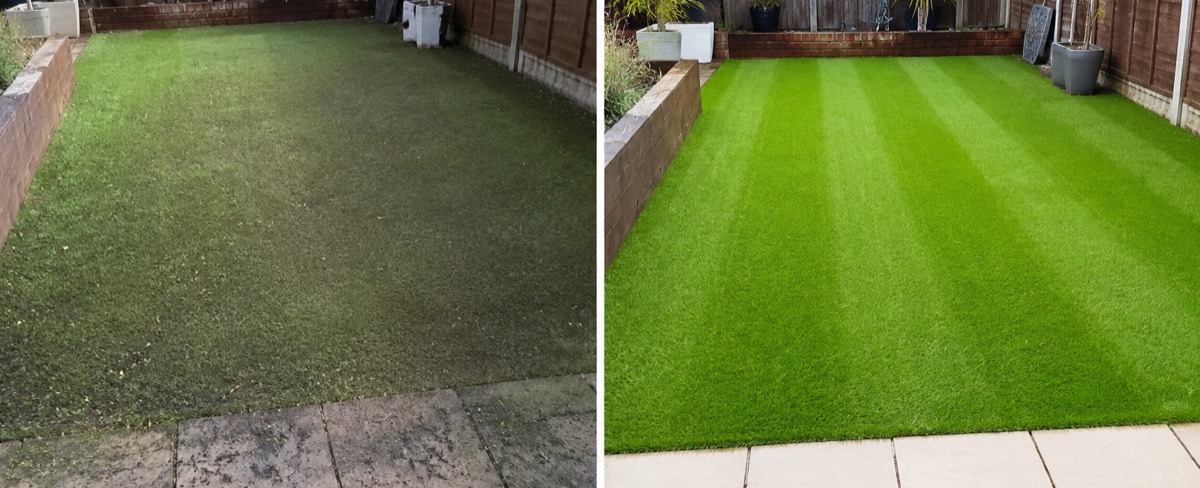
Artificial grass on the Isle of Man can look low-maintenance, but it still collects real dirt. Pets, children, garden furniture, wet leaves, pollen, mud from shoes, sea air and shaded damp corners can all leave the surface looking flat or smelling stale before a patio, garden or holiday-let area feels guest-ready.
This guide is practical cleaning advice for homeowners, landlords, holiday-let hosts and property sellers. It is not a promise to remove every odour, repair poor drainage, fix lifting joins or reverse worn, melted or damaged artificial turf.
Quick answer
Book artificial grass cleaning when pet odours, algae, moss, leaf debris, pollen, food spills, flattened fibres or summer garden use make rinsing and brushing insufficient. Confirm pets, drainage, access, water supply, infill, seams and any nearby patio or exterior cleaning before work starts.
Why artificial grass still needs cleaning
Synthetic grass does not grow, but the garden around it is still exposed to island weather. Rain can hold organic matter in shaded areas, wind can push leaves and grit into the pile, and busy family or pet areas can trap smells below the visible surface.
- Pet areas where urine odour can sit below the surface if it is only rinsed
- Shaded lawns where algae, moss and black spotting gather around edges
- Holiday-let gardens where guests judge the outside space quickly
- Play areas where food, drinks, mud and sunscreen can mark the pile
- Sale properties where flat or stale-looking turf weakens garden presentation
Pet odours need a different plan
Dog urine and other pet mess can cause smells that ordinary rinsing may only move around. The useful first step is always to remove solids, rinse promptly where safe, and then discuss a turf-safe deodorising or enzyme-style approach rather than relying on strong household chemicals.
- Tell CleanCo whether dogs use the same corner repeatedly
- Flag any previous chemical treatments or strong-smelling products
- Mention poor drainage, pooling water or a base layer that stays wet
- Move toys, bowls, garden furniture and planters before the appointment
- Keep pets away until the cleaned area is safe and dry enough to use again
Algae, moss and shaded garden edges
Artificial grass near walls, hedges, north-facing fences or damp corners can collect green growth and organic debris. That is often part of a wider exterior-cleaning job, because nearby patios, steps, conservatory edges, gutters or fence lines may be feeding dirt back onto the turf.
Avoid assuming high pressure is the answer. Aggressive washing can disturb infill, edges, joins or backing on some installations. The safer route is to inspect the condition first and choose a method that suits the surface rather than forcing one cleaning style onto every garden.
When to schedule a garden refresh
Artificial grass cleaning is most useful before summer use, school holidays, guest arrivals, property photos, move-outs or a wider exterior clean. It can also make sense after heavy leaf fall, repeated wet weather or a period where pets have used one area heavily.
- Before holiday-let peak weeks or back-to-back guest stays
- Before estate-agent photos or viewings where the garden is part of the appeal
- After winter shade, moss, leaves and rain have dulled the surface
- After garden works, patio cleaning or exterior maintenance has moved dirt around
- Before family events where children and pets will use the lawn more often
What cleaning cannot fix
Cleaning can refresh appearance and help with some odours, but it cannot correct a badly installed base, failed drainage, lifted seams, melted fibres, heavy wear, contaminated sub-base, permanent staining or pest damage. Those issues need honest assessment before a cleaning appointment is treated as the full solution.
A practical booking checklist
- Share photos of the whole lawn, worst odour areas, edges and access route
- Say whether pets, guests, children, sale photos or move-out handover are the reason for the clean
- Flag drainage problems, loose joins, lifted corners, damaged fibres or previous treatments
- Confirm outside tap access, parking, locked gates and whether furniture needs moving
- Consider pairing artificial grass with patio, steps, conservatory, window or soft-washing work if the whole garden needs to present well