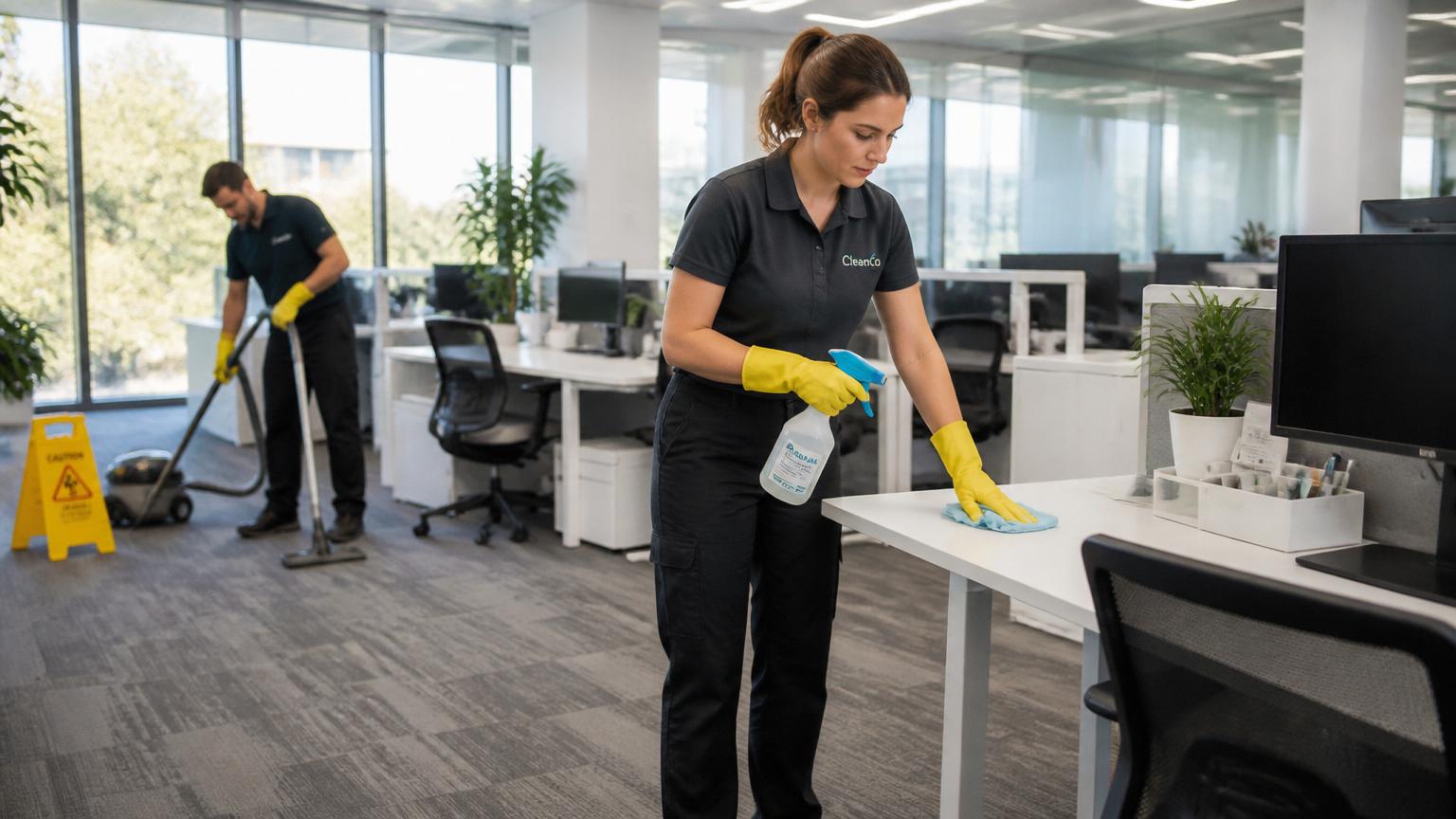
A useful office-cleaning agreement should be more specific than 'clean the office'. Workplaces differ in footfall, layouts, kitchens, washrooms, floor finishes, security and working hours. On the Isle of Man, wet footwear and wind-blown grit can also change what entrances need from one week to the next. A written room-by-room scope makes the service easier to quote, deliver and review.
Quick answer
List every included space, the task required, its frequency and any access or hygiene controls. Separate routine cleaning from consumables, waste collection, pest control, repairs, specialist decontamination and high-level work unless those items are explicitly assessed and agreed. Nominate one contact for access and one route for reporting defects, shortages or missed areas.
Start with rooms, not a generic hours estimate
- Entrances, reception areas, meeting rooms and circulation routes
- Open-plan work areas, private offices and agreed desk surfaces
- Staff kitchens, tea points and dining areas
- Washrooms, showers or changing areas where present
- Internal glazing, doors, partitions and accessible ledges
- Storage, print rooms, stairs, lifts and other shared areas
A walk-through helps identify actual surfaces, furniture density and access limitations. It also prevents assumptions about areas that look connected on a floor plan but have different occupiers, keys, alarm zones or confidentiality requirements.
A practical routine office-cleaning checklist
Work areas and meeting rooms
- Empty agreed general-waste and recycling bins without sorting confidential material
- Vacuum, sweep or mop accessible floors using a method suitable for the finish
- Dust agreed accessible surfaces without moving papers, devices or personal items unless authorised
- Wipe agreed touchpoints such as door handles, push plates and light switches
- Spot-clean washable marks where the surface and product are compatible
Kitchens and tea points
- Clean agreed worktops, sinks, taps and accessible appliance exteriors
- Wipe tables and other food-area touchpoints
- Clean floors and remove ordinary waste under the agreed waste arrangement
- Report leaks, damaged seals, pests, heavy grease or spoiled food rather than hiding the issue
- State whether dishwashing, fridge interiors, ovens and consumable restocking are included or excluded
Washrooms
- Clean agreed sanitary fixtures, basins, taps, mirrors and accessible surfaces
- Clean floors with suitable equipment and use signs or access controls while surfaces are wet
- Empty agreed bins and report blockages, leaks, damage or persistent odours
- Define who supplies and replenishes soap, paper products and other consumables
Choose frequency by use and risk
Not every task needs the same interval. Busy entrances, washrooms and kitchens may need attention more often than low-use meeting rooms or internal glazing. Agree a core routine plus periodic detail tasks, then review the schedule after an initial operating period using observed footfall and condition rather than guesswork.
- Frequent tasks: obvious litter, busy washrooms, kitchen worktops and high-traffic floors
- Routine tasks: general floors, bins, agreed touchpoints and accessible dusting
- Periodic tasks: edges, skirtings, internal glazing, vents and detail cleaning
- Seasonal adjustments: entrance moisture, grit and debris during wet or windy weather
Access, alarms and confidential material
Agree who provides keys or access, how alarms are handled, which rooms are restricted and what happens if a cleaner cannot enter. Clear-desk rules and locked confidential-waste containers help keep cleaning separate from document handling. Cleaners should not be expected to move cash, medication, sensitive files, live equipment or personal belongings without a specific authorised process.
Products, surfaces and workplace occupants
Tell the cleaning provider about delicate finishes, known sensitivities and site rules before products are selected. Cleaning can reduce ordinary visible dirt when carried out correctly, but it should not be sold as a guarantee that illness, allergens or every microorganism will be eliminated. Specialist contamination, sharps, bodily fluids, mould caused by building defects and hazardous substances need an appropriate assessment rather than an ordinary office-cleaning assumption.
Build a simple quality and reporting loop
- Keep the current task schedule available to the client contact and cleaning team
- Use a short log for access failures, supply shortages, damage and excluded problems
- Agree how urgent issues differ from routine feedback
- Review recurring missed areas before simply adding more cleaning time
- Update the scope when occupancy, layout, hours or floor finishes change
What to send for an office-cleaning quote
- Premises location, business type and approximate occupied area
- Number of work areas, kitchens, washrooms, stairs and other included spaces
- Typical occupancy, opening hours and preferred cleaning window
- Floor types, delicate finishes and any known access restrictions
- Current problem areas and the standard you expect after each visit
- Consumables, waste, internal glazing and periodic tasks that may need separate pricing