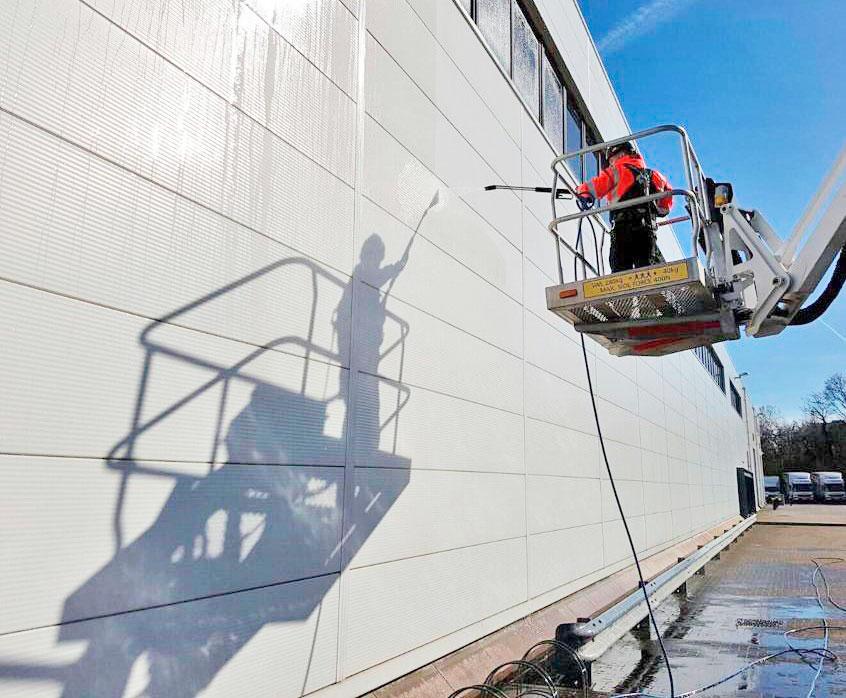
External cladding can collect salt film, traffic grime, organic growth, bird fouling and streaks from joints or fixings. Around the Isle of Man, exposure can vary sharply between a sheltered elevation and a wind-facing or coastal side of the same building. A useful cleaning plan therefore starts with the cladding system and the cause of the marks, not with a promise to pressure-wash everything.
Quick answer
Identify the cladding material and coating, inspect its condition, check the manufacturer's maintenance guidance where available, and test the proposed method on a small inconspicuous area. Agree access, water and runoff controls before work begins. High pressure, strong chemicals or abrasive tools can mark coatings, force water into joints or worsen existing damage, so the correct method depends on the surface rather than the stain alone.
Why cladding becomes visibly dirty
- Salt and wind-blown deposits on exposed or coastal elevations
- Green or dark organic growth where surfaces stay damp or shaded
- Traffic film and general grime near roads, yards and car parks
- Bird fouling, cobwebs and debris around ledges, signs and rooflines
- Run marks below joints, gutters, vents or damaged seals
- Chalking, fading, oxidation or coating failure that cleaning may not correct
Identify the material before choosing a method
Metal panels, coated steel, uPVC boards, composite panels, fibre-cement products and rendered systems do not all respond alike. Age, coating condition, joint design and previous treatments matter too. If the owner has an operations manual, warranty or manufacturer cleaning instructions, those documents should guide the specification. Where the material is uncertain, pause before using aggressive products or pressure.
Questions worth answering during a survey
- What is the cladding product, finish and approximate age?
- Are there loose panels, open joints, failed seals, corrosion or damaged coatings?
- Is the marking loose dirt, organic growth, staining, oxidation or a building defect?
- Which doors, windows, vents, signs, cameras, lights and neighbouring surfaces need protection?
- Can the work be reached safely from the ground, or does it need suitable access equipment?
- Where can water and residue travel, and which drains or planted areas need protection?
Low pressure, soft washing or pressure washing?
There is no single correct answer for every elevation. A low-pressure rinse and surface-appropriate detergent may suit loose grime on a sound coating. A carefully specified treatment may be considered for organic growth where the product, dwell time, rinse method and surrounding protections are suitable. Controlled pressure may have a place on robust surfaces, but pressure alone is not proof that a method is safe for coated panels, seals or joints.
Ask for a test patch and let it dry before approving the full elevation. Check for colour change, patchiness, coating damage, visible residue and water entry. A test cannot reveal every concealed defect, but it gives the owner and contractor better evidence than choosing a method from a distant photograph.
Plan access and the area below
High-level cladding may require a separately planned access system and competent operators. The work area below may also need barriers or timing controls to protect staff, residents, customers, vehicles and passers-by. A ladder is not automatically the right working platform, and cleaning should not proceed in unsuitable wind or other conditions merely to keep a date in the diary.
Protect openings, electrics and drainage
- Close or protect vulnerable windows, doors, vents and air intakes as appropriate
- Identify external electrical equipment, damaged fittings and other water-sensitive items
- Move vehicles and loose items out of the likely spray or runoff zone
- Agree how signs, lighting, cameras and delicate finishes will be treated
- Keep wash water and products away from unsuitable drains, soil, planting and neighbouring property
- Confirm who will manage barriers, access, alarms and the work area during business hours
Know when cleaning is not the first job
Cleaning will not repair failed seals, loose fixings, corroded metal, water ingress or a deteriorating coating. Unexplained streaks may return if the source is a leak or building defect. Suspected asbestos-containing materials, hazardous contamination, live electrical defects and structural concerns need assessment by appropriately competent specialists before ordinary exterior cleaning is considered.
A useful cladding-cleaning quote checklist
- Building address, use and elevations included in the quote
- Known cladding product, coating, warranty information and previous cleaning history
- Photographs of typical staining plus any damaged or difficult areas
- Approximate height, ground conditions, access restrictions and operating hours
- Proposed test area, cleaning method, products and rinse approach
- Protections for openings, electrics, signs, people, vehicles, drains and planting
- Explicit exclusions, defect-reporting route and the standard used to accept the finished work
How often should cladding be cleaned?
Use condition and manufacturer guidance rather than a universal calendar interval. A sheltered wall may stay presentable longer than an elevation exposed to salt, shade, roads or persistent runoff. Periodic visual checks can identify localised soiling and defects early, but they are not a substitute for any inspection or maintenance required by the cladding supplier, warranty, lease or building owner.