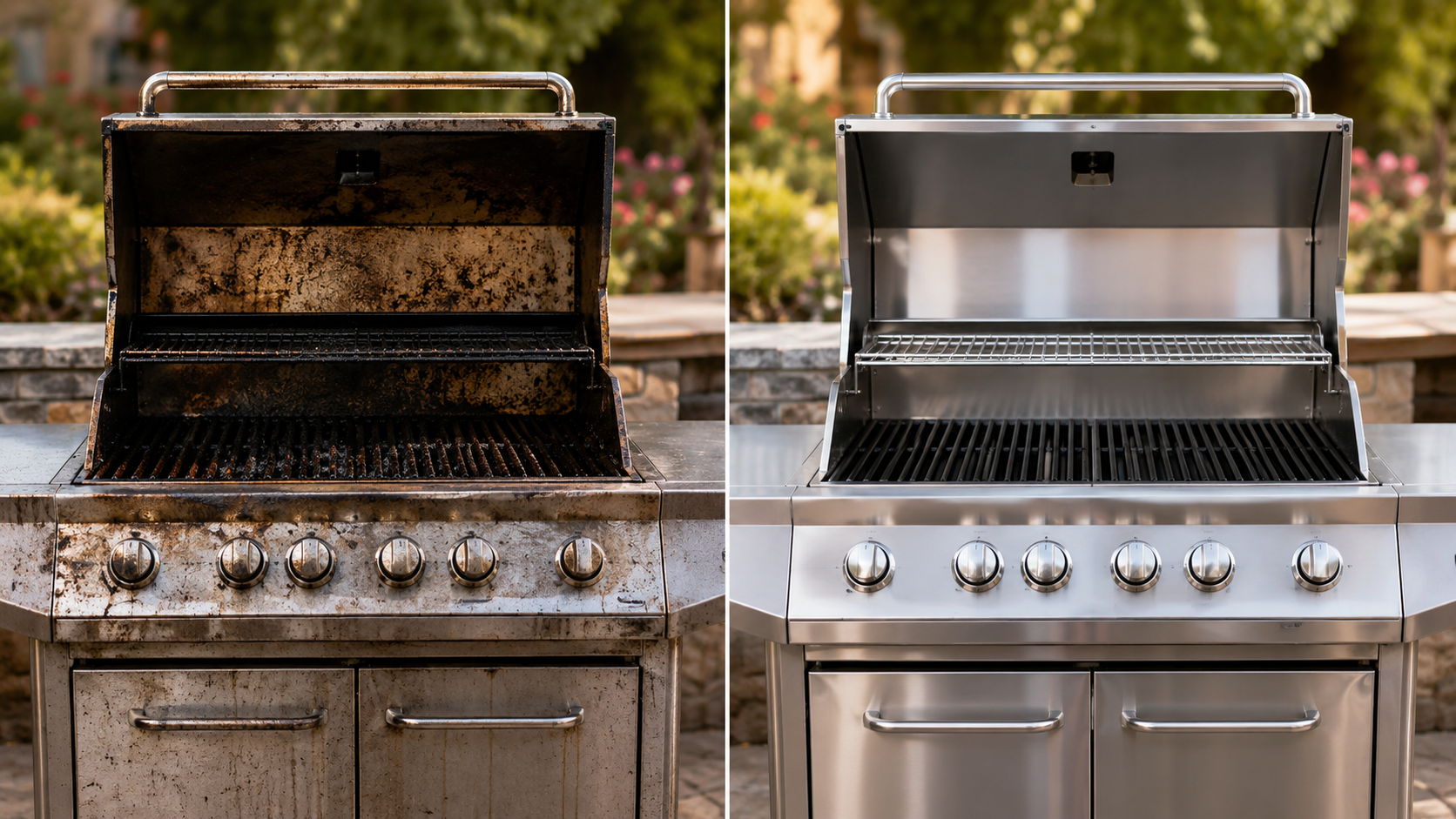
An Isle of Man barbecue can spend weeks between uses collecting grease, carbon, salt-laden air, dust and moisture. When a dry evening finally appears, discovering a sticky lid, blocked-looking tray or mouldy cover is a poor start to dinner.
This guide explains what a careful barbecue clean can cover, what should be checked before booking and where cleaning stops and appliance repair begins. Always follow the manufacturer's instructions for your exact model, fuel and finish.
Quick answer
Book a barbecue deep clean when grease and burnt residue have built up beyond a normal after-use brush-down, or before a holiday-let season, family gathering, property handover or the first use after winter storage. The barbecue must be fully cool, disconnected or made safe as its manufacturer directs, and free from live fuel before cleaning begins.
Why island weather makes storage matter
Wind-driven rain and damp air can work under a cover, while coastal exposure can leave grime on exterior metal. A cover helps only when the barbecue is cool, reasonably dry and ventilated. Trapped moisture can encourage surface deterioration, stale smells and mould on dirt or residue.
- Check under the cover and inside the lid before the first summer use
- Empty removable grease cups or trays before they overflow
- Remove loose ash only when it is completely cold and safe to handle
- Keep the barbecue away from sheds, fences, trees, shrubs and garden waste when in use
- Never leave a lit barbecue unattended
What a barbecue cleaning quote should confirm
Barbecues vary widely. A compact charcoal kettle, gas grill, ceramic cooker and built-in outdoor kitchen do not have the same removable parts, coatings or access. Photos and model details help prevent the wrong method being used on enamel, stainless steel, cast iron, painted panels or plated racks.
- Make, model, fuel type and whether the unit is freestanding or built in
- Cooking grates, warming racks, removable trays, drip pans and grease cups
- Interior lid and firebox surfaces that the manufacturer permits to be cleaned
- Exterior panels, shelves, handles and controls that need a finish-safe method
- Access to water, power, ventilation and a suitable area for removable parts
Gas barbecue limits and warning signs
Cleaning is not a gas-safety inspection or repair. Damaged hoses, corroded burners, blocked jets, unreliable ignition, a smell of gas, damaged regulators or loose connections need appropriate technical attention. Do not operate a barbecue that appears unsafe, and do not ask a cleaner to dismantle or certify gas components outside the agreed cleaning scope.
Grates, racks and grease trays
The most visible work is usually on removable cooking surfaces and grease-catching parts. The right approach depends on the material: cast iron may need drying and re-seasoning, enamel can chip if treated aggressively, and some plated or coated racks should not be attacked with harsh abrasives. Manufacturer instructions take priority over generic cleaning hacks.
Before reassembly
- Rinse permitted removable parts so cleaning residue is not left on cooking surfaces
- Dry parts thoroughly, especially cast iron and crevices that can hold water
- Check that trays and grease cups are correctly seated
- Keep burners, jets, igniters and electrical components dry unless the manual specifies otherwise
- Carry out the manufacturer's pre-use checks before cooking again
Holiday lets and guest barbecues
A holiday-let barbecue needs a clear handover standard because guests may not know how the previous group left it. Add the barbecue to the changeover inspection, record damage separately from cleaning, empty grease safely and leave model-specific operating and fire-safety instructions where guests can find them. Cleaning cannot replace host safety checks or maintenance responsibilities.
What cleaning cannot promise
A deep clean can remove a substantial amount of accessible grease and residue, but it cannot make every aged component look new. Permanent heat staining, corrosion, damaged enamel, faded paint, warped trays, failed ignition and worn burners may remain or require replacement. Results depend on the barbecue's material, condition and maintenance history.
A practical booking checklist
- Send clear photos with the lid open and closed, without operating the barbecue
- Provide the make, model, fuel type and any known faults
- Confirm when it was last used and that it can be fully cool before the appointment
- Remove food, utensils and unrelated items from the work area
- Agree which parts are cleanable and which gas, electrical or repair work is excluded