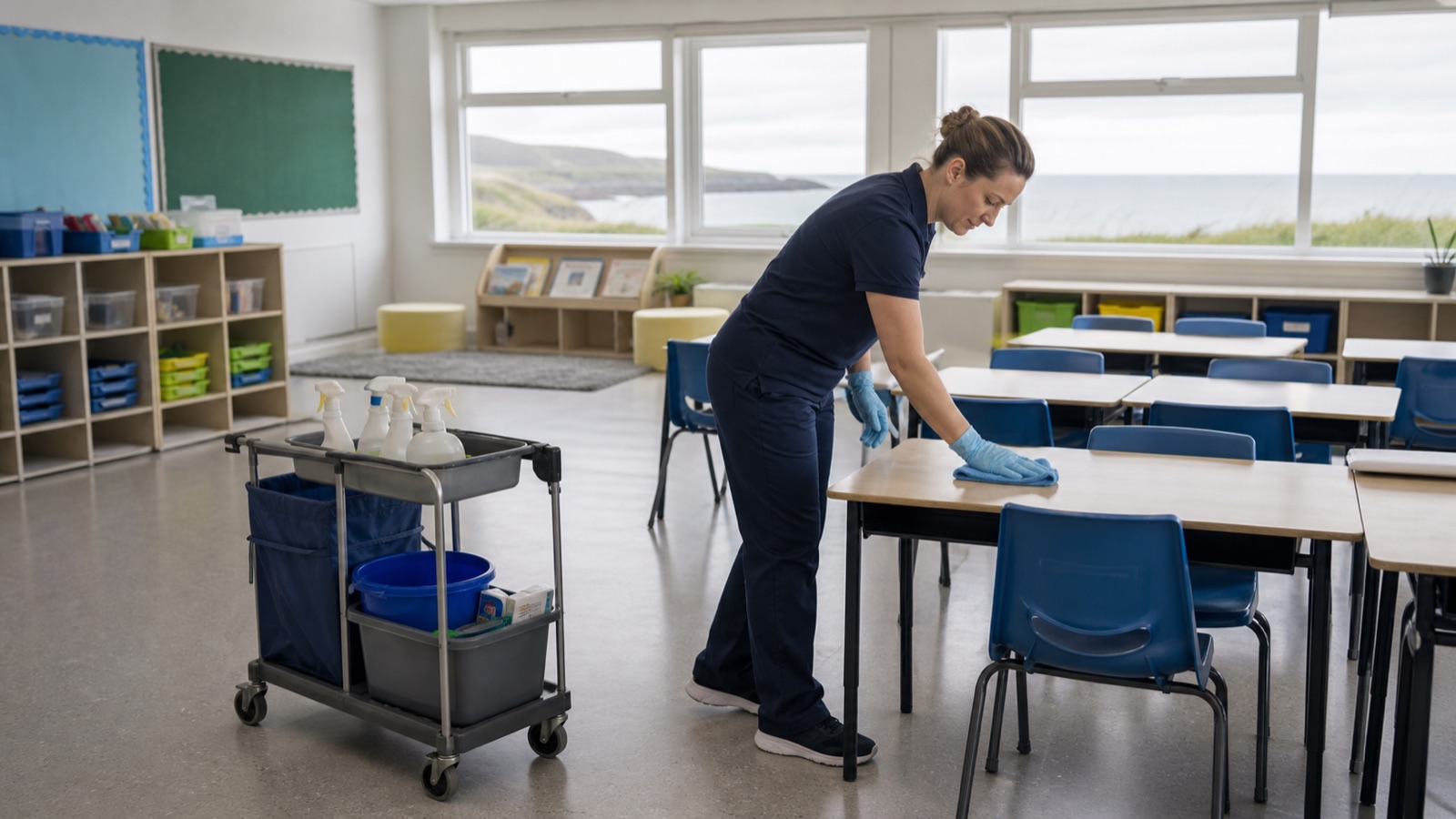
The summer break can provide a useful access window for deeper cleaning in Isle of Man schools, nurseries and other education settings. It is not simply a longer version of a routine evening clean. Furniture may be moved, maintenance teams may be working, floors may need treatment and some rooms may remain occupied. A written scope, access plan and handover date are more useful than a vague instruction to 'deep clean the school'.
Quick answer
Build the summer clean room by room. Record the surfaces and tasks included, who clears personal or teaching materials, which areas remain restricted, what maintenance is scheduled and when each room must be handed back. Keep ordinary cleaning separate from hazardous contamination, building repairs, pest treatment, high-level access and specialist floor restoration unless each is assessed and explicitly included.
Start with a room and surface survey
- Classrooms, practical rooms, libraries and agreed storage areas
- Entrances, corridors, stairs, halls and circulation routes
- Staff rooms, offices, kitchens and dining areas
- Washrooms, changing rooms and accessible facilities
- Internal glazing, doors, partitions, skirtings and reachable ledges
- Carpets, resilient floors, sealed hard floors and any specialist finishes
A walk-through should note damaged surfaces, adhesive residue, ingrained marks, moisture problems and maintenance defects before cleaning begins. Photographing agreed pre-existing damage for the handover record can avoid confusion without presenting those images as public client work.
A practical summer deep-clean checklist
Classrooms and shared learning spaces
- Confirm who removes displays, books, loose resources and personal items
- Dust and wipe agreed accessible furniture, shelving, ledges and touchpoints
- Clean compatible desks, chairs and washable surfaces without damaging finishes
- Vacuum carpeted areas and clean hard floors using a surface-appropriate method
- Report damaged furniture, chewing gum, paint, ink or adhesive that needs separate treatment
Washrooms and changing areas
- Clean agreed fixtures, partitions, basins, taps, mirrors and accessible surfaces
- Remove ordinary limescale or residue only where the product and surface are compatible
- Clean floors with suitable signs or access controls while surfaces remain wet
- Report leaks, blockages, damaged sealant, persistent odours or suspected mould causes
- Agree separately who replenishes soap, paper products and other consumables
Kitchens, dining spaces and staff rooms
- Define whether cupboards, fridges, ovens or other appliance interiors are empty and included
- Clean agreed worktops, sinks, tables and accessible appliance exteriors
- Keep food-area cloths and equipment separate from washroom cleaning equipment
- Report spoiled food, pests, damaged seals, heavy grease or unsafe equipment
- Schedule enough drying and ventilation time before areas are restocked
Coordinate cleaning with maintenance work
Painting, flooring, electrical work, deliveries and furniture moves can quickly undo a completed clean. Sequence dusty or disruptive maintenance first where practical, then complete the detailed clean and final floor work. Use a room-release plan so cleaners are not working beneath contractors or repeatedly reopening finished areas.
Control products, equipment and storage
Cleaning products can cause skin or breathing problems and must be selected, used and stored under the setting's risk controls. Product labels and safety information matter; stronger is not automatically safer or more effective. Never mix products, decant them into unlabelled containers or leave chemicals and equipment accessible to children. Agree secure storage and key control before the job begins.
Avoid unsupported hygiene promises
A thorough clean can remove ordinary visible dirt when the right method is used, but no routine contractor should promise a germ-free school or claim to prevent illness. Bodily fluids, sharps, hazardous substances, pest contamination, extensive mould or a known infectious incident require an appropriate site-led assessment and may need specialist procedures outside an ordinary cleaning scope.
Plan access, safeguarding and occupied zones
- Name the authorised site contact and emergency contact for each work period
- Record keys, alarms, restricted rooms and sign-in or identification requirements
- State whether any children, staff, clubs or contractors will remain on site
- Separate work zones and protect wet floors, trailing leads and cleaning equipment
- Confirm the setting's safeguarding, vetting, supervision and data-confidentiality requirements before appointment
Use a pre-opening handover
Leave time between completion and reopening for inspection, drying, ventilation, furniture reset and correction of agreed snags. The handover should identify completed rooms, excluded tasks, damage or defects found, supplies that need replenishing and any areas still controlled by maintenance teams.
What to send for a school-cleaning quote
- Site location, setting type, approximate size and required completion date
- Room list, floor types, washroom count and occupied or restricted zones
- Photos or a site visit showing current condition and access constraints
- Tasks expected in cupboards, appliances, internal glazing and storage areas
- Known delicate surfaces, maintenance work and specialist exclusions
- Required access, safeguarding, supervision, insurance or documentation checks