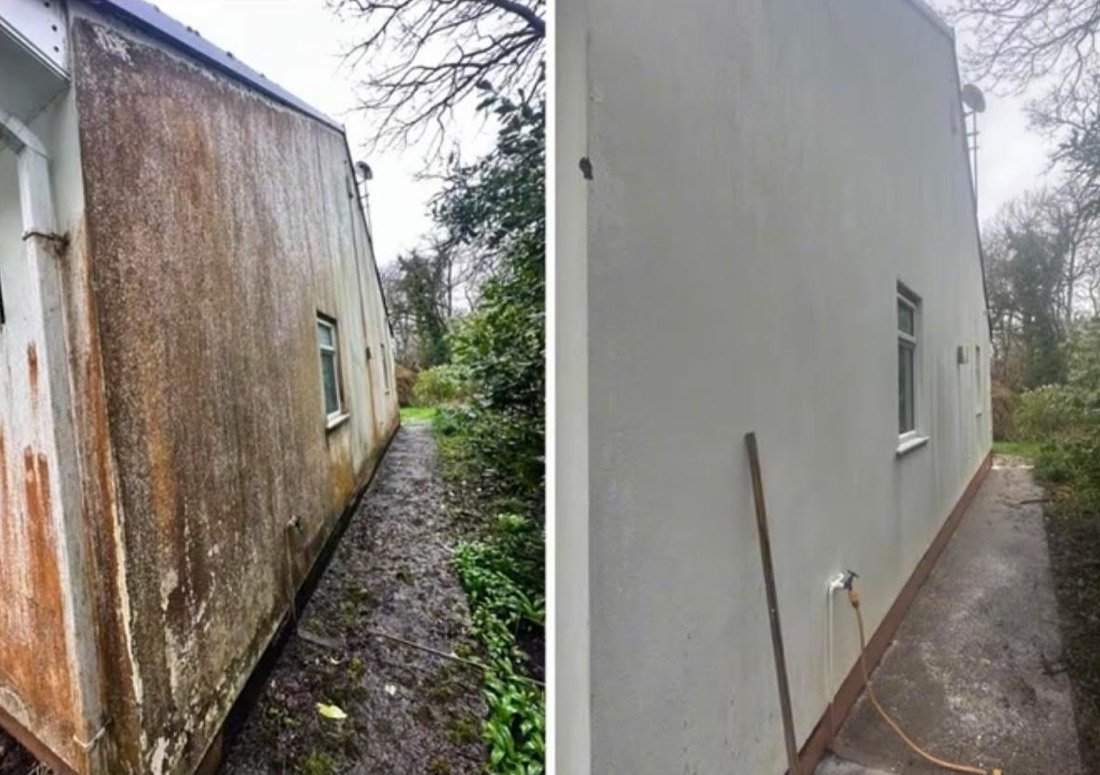
Red, green or dark staining on rendered walls is common on exposed and shaded Isle of Man properties, but colour alone does not prove exactly what is growing or how the wall should be cleaned. Sea spray, rain, traffic film, organic growth, leaking rainwater goods and an ageing finish can overlap. The useful first step is a surface and access assessment, not a promise that one chemical or one pressure setting suits every elevation.
Render-cleaning checklist at a glance
- Photograph every affected elevation in daylight, including close views and the full wall
- Identify the render or coating where possible and record cracks, loose areas and previous repairs
- Check gutters, downpipes, overflows, sills and roof edges for recurring water tracks
- Map doors, opening windows, vents, lights, sockets, cameras and other sensitive fittings
- Note plants, ponds, neighbouring property, public paths and where rinse water can travel
- Choose a test area and a method appropriate to the surface rather than maximum pressure
- Agree access, weather limits, exclusions and the realistic finish before work begins
Why Isle of Man elevations stain differently
A sea-facing wall in Port Erin can receive a different mix of wind-driven rain and salt from a sheltered Douglas elevation beside traffic, or a north-facing wall near trees inland. Shade and slower drying can support green growth; persistent red or darker trails may be more visible around damp routes and textured finishes. Local exposure is relevant, but it does not replace inspection of the actual wall.
Look for the moisture route, not only the stain
If staining repeatedly follows a leaking joint, blocked gutter, overflow or cracked sill, cleaning alone will not remove the cause. Record the pattern and arrange the appropriate maintenance separately. A cleaning quote should not be presented as a diagnosis or a repair guarantee.
Why aggressive pressure can be the wrong answer
High pressure can mark softer finishes, open weak areas, lift paint or force water towards cracks, seals and vents. It may also remove visible growth without addressing what remains in the texture. Low-pressure application and controlled rinsing are often more suitable for rendered walls, but the product, concentration, dwell time and runoff controls still need to match the surface and site.
What a useful quote should define
- Which elevations and surface areas are included
- The proposed method and whether a small test area is required
- How fragile areas, openings, fittings, plants and neighbouring surfaces will be handled
- Access equipment and any areas that cannot be reached safely
- Weather conditions that could postpone application or rinsing
- Runoff, drainage and water-supply arrangements
- Pre-existing defects and stains that may remain after cleaning
- What aftercare or maintenance is included, if anything
Plan around weather and the wider property
Wind can carry spray beyond the target wall, while heavy rain can shorten useful dwell time or move runoff unpredictably. Very hot, fast-drying conditions can also make control harder. Check the Isle of Man Government forecast close to the appointment and leave room to reschedule. Keep people and pets away from the work zone, close agreed openings and identify any shared boundaries or public access before equipment is set up.
Set an honest expectation for the finish
Cleaning can improve removable dirt and biological staining, but it cannot restore missing coating, reverse weathering, hide cracks or make uneven repairs match. Some marks change gradually after treatment and some mineral, rust or paint-related stains need a different approach. Before-and-after photographs should be used as a record of the actual job, not as proof that every wall will respond identically.
Reduce the chance of rapid return
Keep gutters and downpipes clear, repair confirmed leaks, cut back vegetation only where authorised, and monitor slow-drying elevations. There is no honest universal cleaning interval: exposure, shade, surface texture, coating condition and nearby trees all affect recurrence. A periodic visual check is more useful than promising a fixed algae-free period.
Information to send CleanCo
- Property location and which sides of the building are affected
- Wide and close photographs taken in daylight
- Render and coating details if known
- Approximate height, access constraints and parking or public-path issues
- Known cracks, loose finish, leaks, repairs or previous treatments
- Nearby plants, ponds, drains, neighbouring walls and sensitive fittings
- Your timing requirement and whether other exterior work is being planned
CleanCo lists render cleaning, soft washing and related exterior property-care services across the Isle of Man. The final method, availability and scope should be confirmed for the specific surface and access conditions rather than inferred from a photograph alone.