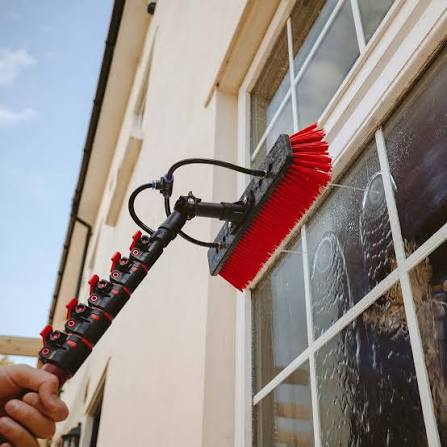
Quick answer: When the inside of the glass is wet on a cold morning, the water you need is on the pane, the sill, and in the track. Wipe the glass, dry the sill, and clear the track before you shut the window on a puddle. Stay on the floor. This is not exterior window cleaning, and it is not the porch mat.
The outside of the glass, the frames as seen from the garden, and sea spray are a different job. That checklist is the window cleaning guide. Water walked in at the front door is the porch mat and the first metre of hall. This note stays inside, at windows you can reach without a ladder.
Where is the water, exactly?
Look before you fetch a cloth. Three places hold it, and they are not the same job.
- On the room side of the glass. You can wipe that.
- On the sill, including the groove at the bottom of the frame. That is where a drip becomes a puddle.
- Between the two panes, as a mist you cannot touch. Wiping the inside will not clear that. It is a failed seal to note, not a smear to polish.
If the glass is dry and only the outside is spotted, stop. You are looking at the exterior job, and it waits for a day you can work from the ground outside, or for a window clean that is scoped as exterior work.
Dry the sill before you chase the streaks
A wet sill wets the next cloth, and then the streaks go back onto the glass. Lift anything sitting in the water: a plant pot, a bottle, a stack of post. Dry the sill with a cloth that is wrung out, then a dry cloth. Standing water left under a pot comes back as a ring.
Check what the sill is before you scrub.
- A painted or uPVC sill can take a damp cloth, then a dry one.
- A timber sill wants the water lifted, not soaked in. Do not scour back to bare wood to make a tide mark disappear.
- Stone or tile can take a damp cloth. Grit in the corner should be wiped out, not ground in.
If the paint is bubbling, or the timber feels soft, dry it and leave it. That is a repair, not a Wednesday wipe.
Clear the track, then the glass
Sliding windows and uPVC openings collect grit in the track. If you wet that grit, you make mud, and the next time the window moves it paints the mud along the frame.
Vacuum or brush the track first, with the window open enough that you can see the channel, and with both feet on the floor. Do not lean out. Do not stand on the sill. A track you cannot reach from the floor is not part of this clean.
Then wipe the room side of the glass. Work from the top down, so the drips land on a sill you are about to dry again. Finish with a dry cloth. A pane that is left damp will look smeared once the room air hits it.
Shut the window only when the track and the sill are dry. Closing it on a puddle puts the water back where you found it.
What about mould on the silicone or the corner of the sill?
A light dark line in the seal can be wiped with the same damp cloth you are already using, then dried. If the seal is loose, or the mark is inside the timber, stop scraping. You will not clean a failed seal back to new, and digging at it makes a gap.
Write it down if you are booking a visit: which room, which window, and whether the mist is on the inside or between the panes. A photograph in daylight is more useful than a description of "the back bedroom window".
Condensation on a cold pane also means the room air is damp. Drying the sill does not change how the room is heated or ventilated. If water is coming in around the frame when it rains, that is a leak to look at, not a reason to use more cloth.
What this clean leaves alone
Stay off ladders. Do not open a window and reach the outside of the glass from inside. Do not treat a conservatory roof as a sill: roofs, high frames and the gutters around them are the conservatory cleaning guide.
Do not empty a window board by throwing plants onto a wet floor. Move them, dry the sill, and put them back on a dry surface. Do not mix this with gutter, downpipe or bin work. Other notes sit on the CleanCo journal.
If you want the inside of the windows on a regular visit, say which rooms, whether any window is painted shut, and whether the mist is between the panes. The quote page is the place to send that.
Frequently asked questions
The glass is wet every morning. How often should I dry the sill?
Dry it on the mornings it is wet. A sill left wet all day soaks the paint or the board under a plant pot. This note does not set a calendar for every house.
I can see mist between the two panes. Will a cloth fix it?
No. Water between the panes is inside the sealed unit. Wiping the room side will not reach it. Note which window, and treat it as a glazing question rather than a cleaning one.
Can I use a lot of spray on a timber sill?
Use less water, not more. Lift what is there, then dry the sill. A soaked timber sill is how a tide mark turns into soft wood.
Is this the same as the exterior window clean?
No. Exterior cleaning is the outside face, the frames from outside, and whatever the weather has put on the glass. This job is the room side, the sill, and the track, from the floor.
The track is above a stair. Should I climb for it?
No. If you cannot stand on the floor and see the track, leave it. Say so when you ask for a visit. A clean does not include leaning over a stairwell.