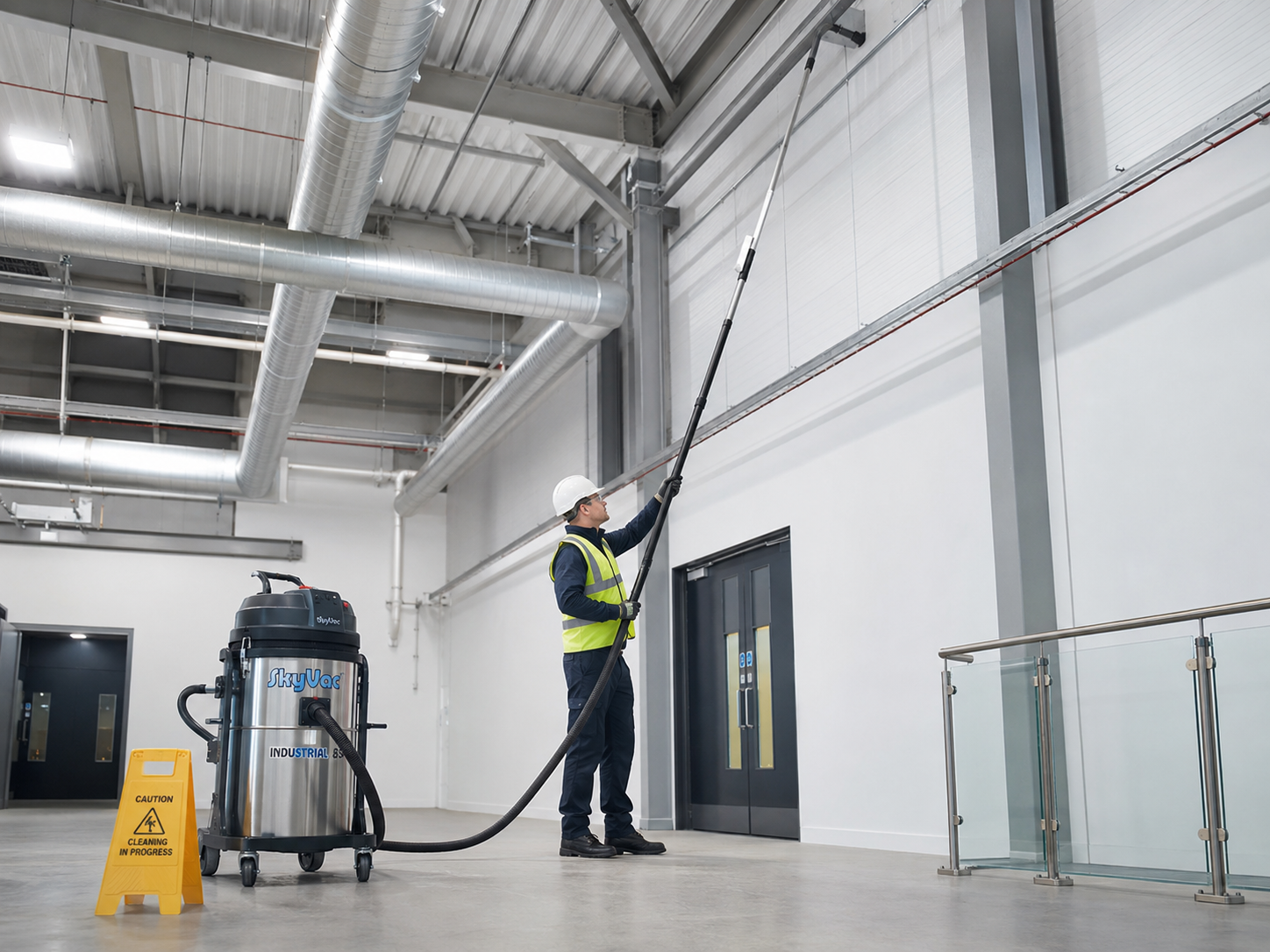
High-level internal cleaning on the Isle of Man deals with dust, cobwebs and loose debris that collect above ordinary reach: ceiling lines, beams, accessible vents, lighting housings, exposed pipework and other elevated surfaces. These areas can be easy to miss during routine floor-level cleaning, especially in tall receptions, halls, workshops, warehouses, communal spaces and older buildings.
This is a scoping guide, not a promise that every high surface is safe or suitable to clean. Electrical equipment, fragile finishes, asbestos-containing materials, hazardous dust, active production areas, inaccessible voids and specialist ventilation systems may require isolation, testing, competent specialists or exclusion from the job.
Quick answer
High-level vacuum cleaning uses extended equipment to remove accessible loose dust, cobwebs and debris while reducing the need to disturb material with dry brushing. A useful quote needs clear photographs, ceiling height, surface details, access constraints, operating hours and any known hazards. The site-specific risk assessment and agreed scope determine what can actually be cleaned.
Where high-level dust tends to collect
- Roof beams, trusses, ledges and the tops of high partition walls
- Accessible external surfaces of ducting, vents and exposed pipework
- Lighting housings, cable trays and suspended fittings where suitable
- High corners, ceiling edges, skylight surrounds and entrance canopies
- The tops of storage structures, signs and fixed interior features
- Tall communal halls, sports or assembly spaces, workshops and warehouses
How to scope a high-level internal clean
1. Map the surfaces and heights
Start with a walk-through or clear photographs. A high-ceiling office is different from a dusty workshop, and an open beam is different from a fragile suspended fitting. Record approximate heights, the material to be removed and any areas hidden behind equipment or storage.
- List the rooms, zones and elevated features to include
- Identify delicate finishes, loose coatings, damaged fittings and unknown materials
- Confirm whether machinery, stock, desks or public routes sit below the work area
- Agree what can be moved, covered, isolated or left out
2. Separate ordinary dust from specialist hazards
Visible dust is not automatically ordinary cleaning dust. Material created by cutting, sanding, combustion, manufacturing, birds, pests, mould growth or deteriorating insulation may need investigation and specialist controls. Cleaning should pause where the substance is unknown or the building information raises concern.
- Tell the cleaner about known asbestos, silica, lead, chemical or biological hazards
- Do not disturb damaged insulation, suspect coatings or unidentified fibrous material
- Treat mould, pest contamination and industrial process dust as separate scope questions
- Confirm whether the premises has permit, induction or isolation procedures
3. Plan access and operations below
Extended vacuum systems can make some high-level work possible from floor level, but they do not remove every access risk. Reach, line of sight, equipment weight, overhead services, people below and emergency routes all matter. Some areas may still need an appropriate access system or may be unsuitable for the proposed method.
- Schedule around customers, staff, deliveries and sensitive operations
- Keep people out of the immediate work zone and protect items below where needed
- Confirm power, lighting, floor condition and space for equipment
- Agree whether alarms, machinery or electrical equipment require authorised isolation
- Plan a final floor-level clean if loosened debris may settle below
Vacuum cleaning, wiping and other methods
Vacuum removal can suit dry, loose dust and cobwebs because the material is captured close to the surface. It is not the same as degreasing, wet washing, disinfection, duct cleaning, electrical maintenance or stain removal. Greasy deposits, ingrained marks and contaminated surfaces need a separate method decision and may fall outside ordinary high-level vacuum cleaning.
What to include in a written quote
- Named rooms or zones, approximate heights and the surfaces included
- The cleaning method and any access equipment expected
- Working hours, exclusion zones and preparation by the customer
- Known hazards, fragile items, electrical restrictions and explicit exclusions
- Waste handling, floor-level finishing and how completion will be checked
- A process for stopping and reviewing unexpected material or unsafe access
What high-level cleaning should not promise
A high-level clean can improve presentation and remove accessible loose contamination, but it is not an electrical inspection, air-quality test, asbestos survey, ventilation-system clean, fire-safety inspection, mould remediation or guarantee that dust will not return. Building defects, active processes and airflow can quickly create new deposits, so frequency should be based on the actual premises rather than a universal timetable.