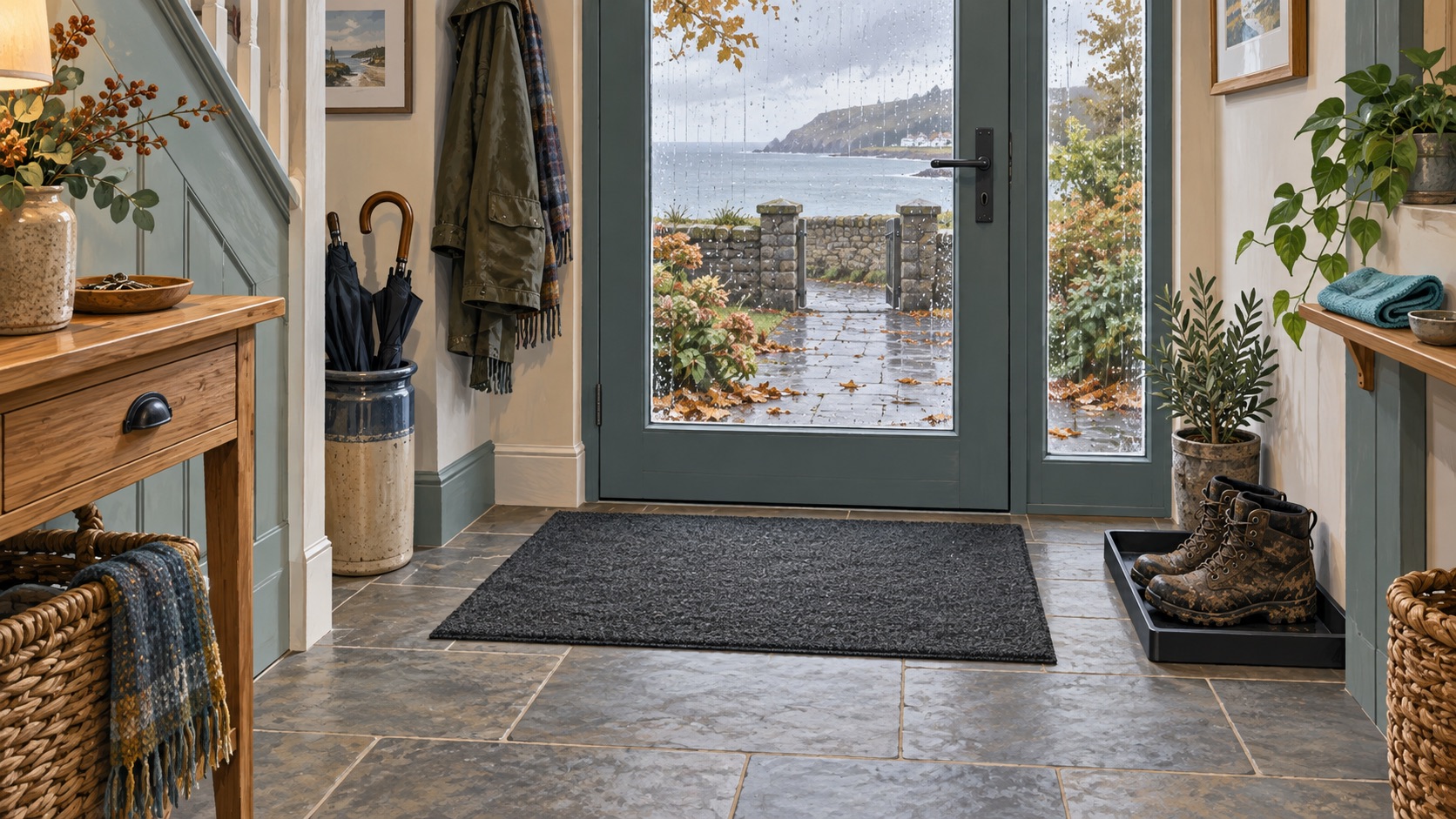
Start at the door: contain wet footwear, lift loose grit, check the mat and clean the affected floor with a method suitable for its finish. Keep people away from a wet cleaning area until it is dry. Mopping the whole hallway while boots continue crossing it usually adds work without fixing the source.
This guide is for an Isle of Man household whose entrance gets dirty again after a school run, dog walk or trip out in wet weather. It covers the doorway, mat and indoor walking route. Exterior algae removal, carpet extraction and repairs are separate jobs to scope, rather than assumed parts of an entrance clean.
Plan around your entrance, not a fixed autumn timetable
A front door opening straight onto a Douglas or Ramsey pavement gives you a different space to manage from a porch reached across a gravel drive. After a beach walk near Peel or Port Erin, look for loose sand around the boot tray; after a muddy garden visit, check the route from the back door instead. These are examples to adapt to your home, not evidence that every coastal property has the same problem.
Check the Ronaldsway forecast before choosing a time to wash removable mats or leave an entrance out of use. An autumn date alone is not proof that rain is coming. If the household will be in and out all afternoon, deal with small dirty patches as they appear and save the larger clean for a quieter window.
Check these five things before getting the mop out
- Where does dirt first appear: outside the threshold, under the mat, beside shoes or several steps inside?
- What is the floor: tile, sealed timber, laminate, vinyl, carpet or an unknown finish? Find the manufacturer’s care instructions where possible.
- Does the mat lie flat, allow the door to move freely and stay in place on that floor?
- Is there a safe place for boots, umbrellas and wet coats that leaves the walking route clear?
- Does water appear even when nobody has used the door? Photograph the pattern and investigate a possible leak or threshold problem separately.
A practical cleaning order
1. Move the source out of the walking route
Put wet footwear in a tray beside the route, where it will not obstruct the door. Empty and clean the tray as needed. Keep a washable cloth available for small drips; do not leave it spread across the floor as an improvised mat. If the entrance is too narrow for storage, choose another location rather than squeezing an obstacle into it.
2. Lift loose dirt and inspect the mat
Remove grit using a tool suitable for the floor, without grinding it into the finish. Use an ordinary vacuum only for dry material and in accordance with its instructions. Lift the mat to check underneath: cleaning the visible top does not deal with trapped debris or moisture below it. Follow the mat label for washing, brushing or vacuuming; let the mat and floor dry before putting it back.
3. Clean only with a suitable method
Use the floor maker’s recommended cleaner and dilution. More product does not necessarily clean better and can leave residue. Avoid experimenting with steam, abrasive pads, strong chemicals or excess water on an unknown finish. Start in a discreet area when the care guidance calls for a test, and stop if colour or finish changes. Never mix cleaning products.
4. Allow a usable drying window
HSE guidance highlights that cleaning itself can leave a slip hazard and that a warning sign does not prevent access. Plan a different safe route where possible and keep people and pets off the damp area. Do not obstruct an escape route. Check that the floor is dry before putting the entrance back into normal use; there is no reliable universal drying time for every material and room.
When another mop will not solve it
Repeated water under the same edge of a mat, lifting floor joints, a loose threshold or a damaged surface needs investigation beyond routine cleaning. Take a photo before changing the area. Distinguish marks that can be removed from wear, staining within a material or a repair issue. A cleaner should not promise to restore an unknown floor to new condition or make it permanently slip-free.
What to send with a CleanCo enquiry
Describe the entrance as a small, specific job rather than asking for an undefined deep clean. For example: entrance mat, accessible threshold, hallway hard floor and the dirty route to the kitchen. Say whether adjacent carpet, internal glass or exterior steps also need assessment; those additions change the scope.
- Your town or parish and practical access or parking information.
- One wide entrance photograph and close-ups of stubborn marks or damage.
- Floor material or product name, if known, and any care instructions.
- The areas to include, with approximate dimensions where helpful.
- When people need to use the door, and whether an alternative entrance is available.
Ask CleanCo to confirm the method, exclusions, drying arrangements and availability before booking. The aim is a clear agreement about what can be cleaned, with fewer surprises when the visit starts. Prices, stain-removal outcomes and appointment times depend on the assessed job.